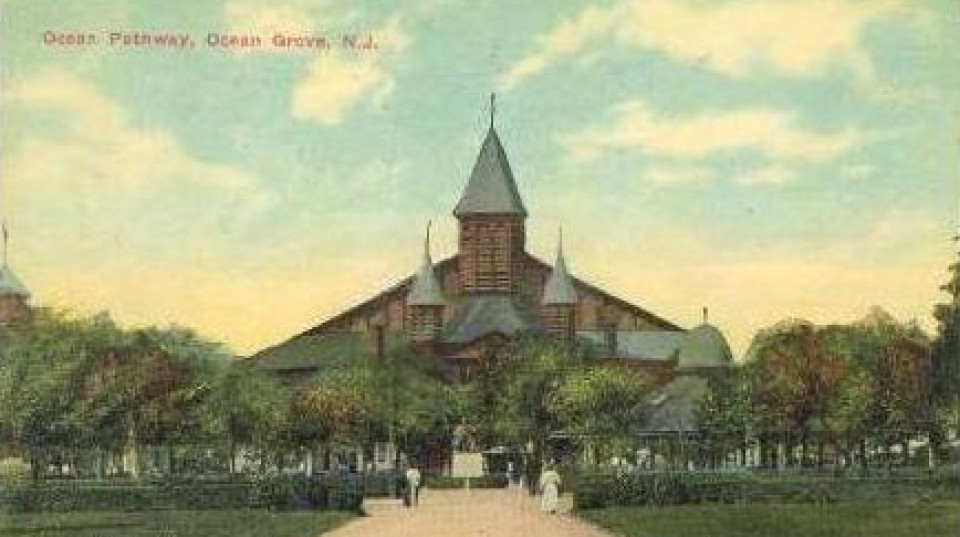
Death of a Mentor

Marvin Crandell hadn’t been to the Annual Meeting of the National Society for Scholarly Research (NSSR) in ten years. From the minute he set foot in the room where he was to serve as a session discussant, people crowded around, eager to greet him. The session moderator had to make an announcement calling him to the dais so they could begin. Marv took his seat, perspiring and looking a little pale. “Terrible headache, Shannon,” he said to his post-doctoral assistant, Carrie Shannon. “You wouldn’t happen to have any ibuprofen on you?”

Carrie dug into her purse, retrieving a couple of tablets. He gulped them down with a glass of water, pouring and drinking another as the crowd settled. “Awfully close in here. Should have skipped breakfast,” he said, mopping his brow. “Left me with an upset stomach. Let’s get on with it.”

The room grew quiet. Every seat was taken. People stood along the walls and spilled out into the hall. Crandell was a big draw.

The session moderator was making introductions when Crandell convulsed and fell forward on the dais, sending a shock wave through the audience. Carrie yelled for someone to call for a doctor, but her instincts told her it was too late. A paramedic came within minutes, followed shortly by the doctor on call, who pronounced him dead of respiratory failure.

Dave Wolfe, president of NSSR and one of Marv’s former students, arrived with the hotel manager about the same time. The manager ordered the room to be cleared. Wolfe knelt down by Marv’s body, now stretched out on the floor. “Baruch dayan emet.” Seeing Carrie’s questioning look, he said, “Blessed is the true Judge. It’s the Jewish blessing on death.”

*****

Marv wouldn’t have been there had it not been for her. Months ago, when Carrie asked if he would serve as discussant for a session she’d proposed, he’d leaned back in his chair, hands clasped behind his head, an annoying grin on his face. “I’m a full professor. I’m faithful to my wife. There aren’t any new movies I want to see. It’s a no-brainer, Shannon. Why would I go to a convention?”

Carrie could see herself as she was then, leaning against the doorframe of his open office, refusing to rise to the bait. “Because we need you, Marv,” she’d said. “We really need that grant. Everybody on the grant review committee will be at NSSR. You know as well as I do that when they meet, they’ll skim over those proposals. If they come to our session, they might look twice when they see our proposal. You’re the only one with the professional savvy and political clout to pull them in to hear us.”

Marv scowled.

Carrie plowed on. “All you’d have to do is respond to our papers. With you as a discussant, our session will be packed. Otherwise, who’s going to show up to hear three post-doctoral fellows? I’m just asking you to think about what it could do for us. You don’t even have to read the papers. I can tell you what we’re doing over lunch, my treat.”

“Where is it this year?” Marv asked resignedly. Carrie knew she’d won. It was no small victory. Marvin Crandell was one of the greats in her field. The fact that he’d taken an interest in her work explained why she’d been able to land a post-doctoral fellowship at the prestigious university in New York where he taught. But he could dig in his heels. When he did, he couldn’t be moved.

When the program for the 1979 Annual Meeting of NSSR came in the mail, Carrie went straight to Marv. “How did you fast talk me into this, Shannon?” He thumbed through the program. “So we’re on Wednesday morning? That’s good. I can fly in Tuesday night and be out of there before noon.”

“The book awards are Wednesday right after our session,” said Carrie. “One of your former students is getting NSSR’s outstanding book award. I just finished reading it. Impressive—it’s based on her dissertation. You might want to stay on for that.”

“Oh?” Marv raised his eyebrows. He took one look at the program and closed it in disgust. “Wendy Gilford? She dropped out before the end of her first year. I wouldn’t walk across the street to hear anything she has to say.” He started to hand the program back to Carrie. “Wait a minute. What’s the title?” Finding it, he was silent for a moment. “You wouldn’t mind lending me your copy, would you? I’d like to have a look at that award winning book.”

When she returned with the book, Marv said, “Close the door, Carrie. Sit down a minute.” It was serious. Marv rarely called her by her given name.

He leafed through the book, shaking his head. “How well do you know Wendy Gilford?”

Carrie hedged. “We were in the same doctoral program. She was proud of the fact that she studied with you before she transferred.”

“Go on,” Marv looked up from the book.

“We don’t have much in common.”

“And?” Marv pushed.

She searched for words. She’d never liked Wendy, but she didn’t want to be unprofessional. “I don’t quite know how to put it. Wendy’s headed for the top. I’m just interested in doing good work.”

“Headed for the top no matter who gets stepped on?” Marv stood and began digging in a file cabinet. He pulled out a thick file, throwing it on his desk. “Another of my students. Possibly the best student I ever had. Jill Pierson—hard working, brilliant, a couple of years ahead of Wendy. To cut to the chase, Wendy invited her to spend spring break at the family home on the Gulf—Wendy’s from big money. I suppose you know that. They were swimming. Jill was supposedly caught in an undertow and drowned.” Carrie could sense the deep emotion beneath his controlled tone. “Wendy was ‘grief stricken’ and left the program—didn’t finish the spring semester of her first year. Something about it smelled. Now I see what she was up to. Carrie, this book is Jill’s dissertation. I guided her research. This is Jill’s work.”

“I should be sitting here in stunned silence,” said Carrie. “I can’t quite put my finger on it, but I’m not surprised.”

“I don’t know if I ever met anyone else I’d call amoral,” said Marv. “And Wendy’s smart, really smart. Did excellent work when she applied herself. Jill tried to mentor her. I don’t think you can mentor somebody like Wendy. I tried to tell her.” He sighed. “You know, when I saw Wendy’s journal article last spring, it seemed awfully close to Jill’s research. Should have done something then. Makes me wonder about a lot of things.” He sat brow furrowed, shaking his head. “I can’t let this award go through. I’ll write to her, give her the opportunity to withdraw her book. There’s time.”

“If she doesn’t?” Carrie asked.

“I don’t suppose she will.” Marv looked grim. “I’ll protest it from the floor of the convention if it comes to that.”

“She might like that, Marv. It would sell more copies of the book.” Carrie was serious. Wendy liked being the center of attention, the more sensational the better.

By the time Wednesday morning of the convention arrived, Carrie was more nervous about the book session to follow than about her own presentation. As predicted, Wendy hadn’t agreed to withdraw her book. Her reply to Marv was curt. “Jill Pierson and I had many conversations about our work. Were she still alive, I would have good reason to ask why her incomplete dissertation so closely parallels my own research.”

Marv informed Wendy that he would contact the Awards Committee and Officers of NSSR. As a courtesy, he sent her copies of letters he wrote. But she was ahead of him. Over the formal protest of the esteemed Marvin Crandell, Wendy Gilford was to receive her award. Marv intended to register a public protest at the awards ceremony.

True to his word, Marv flew in on Tuesday night of the week-long convention. He met Carrie at a breakfast sponsored by a group he founded at least two decades before. It was informal: no speeches, no ceremonies, just professional conversation with colleagues.

As they made their way through the breakfast crowd, Carrie saw Wendy Gilford, dressed in a bright pink silk suit with a short skirt and plunging neckline interrupted at the last minute by a lacey camisole. Marv leaned down and whispered, “I’ll stake my reputation on it, Shannon. That book is plagiarism. But this is your hour in the sun. Don’t let her distract you. Make the most of it. We want all those potential funders to take notice.” That was Marv, always the mentor. Smiling, he’d patted her on the back. “In case I’ve been guilty of failing to say so, I’m very impressed with your work. If I have anything to say about it, we’ll keep you on at the University. You don’t need me to launch you, you’re already sailing. Just trust your instincts.”

Marv was relaxed then, seemingly unperturbed by what was to come. So many people wanted to talk to him that it was almost time for breakfast to end when he took time to eat something. Wendy made her way through the crowd intercepting them at the breakfast buffet. She was as smooth as silk. “No hard feelings, Dr. Crandell.” Taking a cup of coffee from the waiter, she set it down, reaching for the cream. “I know it was a terrible personal blow when you lost Jill Pierson. I was close to her, too, although not so close as you were.” The deliberate innuendo in her tone was meant for those around.

Balancing his Danish and program notes in one hand, Marv picked up a cup of coffee, took a mouthful, and made a face. “Terrible coffee,” he said, turning away. “Is this the best they can do?”

He finished off his Danish, listening to people who wanted to see him, untypically, saying little. It was nearly time for their session when he extracted himself from the crowd, heading for the door, “I need some fresh air. Meet you at the session in a couple of minutes, Shannon.”

“More likely he wants a smoke. He really should quit.” Sandra Hogan, one of Marv’s doctoral students, sipped her coffee. “Have you seen Wendy Gilford? I thought she was here just a minute ago.”

When Carrie got to the session room, Wendy was already there, seated conspicuously on the front row, crossed legs on display. After Marv’s sudden death, she made a dramatic exit, running out of the room sobbing.

******

With a heavy heart, Carrie called Alice Crandel from the convention office. She gave her the tragic news, promising to meet her plane.

Returning to the session room, Carrie waited with Dave Wolfe for Marv to be taken to the morgue, “Carrie, I think Marv would want you to go on,” he said. “We can hold your session on Friday afternoon instead of the President’s reception. I’ll be your discussant.” As hard as it would be, Carrie knew he was right. It was generous of him to offer time for an event honoring his term as president of NSSR, too.

“There’ll still be enough time for a reception,” Wolfe said. “We’ll hold it in Marv’s honor.”

In the meantime, Wendy accepted her book award in a tear stained suit, dedicating her work to the memory of Marvin Crandell, “who guided the book’s early development and has been the source of my greatest inspiration and encouragement since I studied with him. Despite recent misunderstandings, I count Marv as mentor and friend.” When she heard the report, Carrie was grateful that she hadn’t been there to throw up in public.

Once Marv was taken care of, she went to her room. Carrie hadn’t allowed herself the luxury of crying. She’d lost more than a mentor. Marv had become a friend.

Despite the tears, her mind wouldn’t let go of what had happened. It was more than guilt over having talked him in to coming to the convention. Something felt wrong. Marv was a smoker, but respiratory failure out of the blue? At breakfast he’d said the coffee tasted terrible. She hadn’t thought so, assuming it was his way of cutting Wendy short. But what if someone had laced it with poison? If so, who, and why Marv?

Wendy was the obvious choice—but was the book kerfuffle sufficient motive? She was more likely to bask in perverse attention. Someone from the hotel staff poured the coffee. People picked up or were handed a cup. Now there’d be no way to know which cup Marv drank from.

She washed her face, subdued her unruly, short brown hair, and repaired her make-up. From there she went straight to hotel security. Officer Stanley Reid, head of security, was sympathetic, but unmoving. “The police were here. Doesn’t seem any call for an autopsy unless you have some real evidence. Mrs. Crandell saw no need. You’re welcome to talk with Lydia Ayles. She runs our convention office. If you find out anything I need to know, my door’s open.”

On the way to the convention office, she ran into Della James, a member of her graduate cohort. She hadn’t known Della very well, but it occurred to her that it might be smart to talk with anybody she met who’d also been in the same graduate cohort as Wendy or who’d studied with Marv. “I missed the book awards, Della. Were you there?” she asked.

“Yes and I was thoroughly disgusted,” said Della. “That suit was disgraceful, unprofessional—at least not for this profession! But then, Wendy’s never known how to relate to men except to try to get them in bed. She doesn’t care what us women think. The only reason I went was because word was out that Dr. Crandell registered a protest against giving her the award. I wanted to be there to add my two cents, but—wasn’t it awful? I confess, after Dr. Crandell’s death, I went to the book session out of curiosity. Did you know she tried to hire me to do a literature review for her when we were all in graduate school?”

Della was only too glad to elaborate. “Remember? It was a killer assignment our second year! Well, she had the nerve to say, ‘I already know how to do that. I can’t be bothered, not when I could be spending the weekend with this incredible man on Paradise Island in the Bahamas.’ I told her it would be unethical. She just laughed it off. I’m sure she found somebody else to do it.”

It was hard to extract herself from Della. But she wasn’t learning anything new.

Once she got away, Carrie talked to Lydia Ayles, Convention Coordinator. “I was expecting you. Stan Reid called,” she said. “I’m so sorry.”

“I’m meeting his wife this evening. It was all so sudden. Mrs. Crandell wants to know if her husband was showing any symptoms,” Carrie improvised. “I was wondering if I could talk to the people who served at the breakfast he attended this morning. I don’t suppose they’ll be able to tell me anything, but maybe it will ease her mind.”

“Poor thing must be in shock,” said Ms. Ayles. “We are. Let’s see if I can find the names of the people serving this morning. We bring on a lot of extras for events. They’ll be here all day. We have a pretty tight schedule, but I’ve no objection if you chat with them informally as long as it doesn’t interfere with the work.” She gave her three names: Earl Grant, Marsha Tippins, and Leticia Rowen.

“I thought there were four people,” said Carrie. “Two at the buffet and two moving through the crowd collecting plates and cups.

“No, just three,” said Ms. Ayles. “Here are their assignments today and tomorrow. I’ll let them know it’s okay by me if you talk with them.”

Marsha Tippins was circulating with a tray of sandwiches when Carrie found her at a stand-up luncheon. She was far too busy to approach. But Sandra Hogan was there, still teary. “It’s devastating. Marv was a good man. The only reason I’m finishing my degree is because he gave me a second chance. You knew I dropped out my first year? When I came back, he didn’t pry. He just asked if I was in a better place.” Sandra was wringing her hands.

“A better place?”

“I was in an abusive relationship.” Sandra seemed eager to talk. “I couldn’t have survived if Marv hadn’t asked Wendy Gilford to mentor me. She gave me the courage to leave my boyfriend. She stuck with me all through the rest of that term, even after I dropped out. She even took me to her family home on the Gulf one weekend. She always reminded me that Marv believed in me so I should believe in myself.”

It was a side of Wendy that Carrie hadn’t seen. But then, Wendy was full of contradictions.

“Funny thing, when I returned to the university and asked Marv if I could pick up where I left off, he didn’t remember asking Wendy to support me.”

“Really? What did he say?” asked Carrie.

“He said, ‘Did I do that? It doesn’t sound like me.’ But I know he did. And I was so proud of her at the book awards ceremony.” It seemed to be a struggle for Sandra to keep her tears in check. Carrie understood.

Marsha Tippins stopped with a tray of bread rounds topped with warm Camembert and mushrooms. Sandra took one and faded into the crowd.

“These look delicious,” said Carrie, smiling at Marsha. “Weren’t you serving at the breakfast in that room next to the lecture hall this morning?”

“You were there?” Marsha asked.

“Ms. Ayles may have told you I want to chat with the people who served,” Carrie said. “Did you know the other three?”

“No. It’s the first time I’ve worked one of these events,” said Marsha.

“Ms. Ayles said there were just three of you, I thought there were four. ”

“Maybe somebody showed up in the wrong room,” said Marsha. “There were four and we were plenty busy. I didn’t notice the man who died. Poor guy. Sorry I can’t help you. If you’ll excuse me, I have to keep going.”

The contact list showed Earl Grant and Leticia Rowen at different events starting in about an hour. Carrie decided to visit the exhibit hall in the meantime. It would be a good place to run into people. She went straight to the University Press booth. They’d published Wendy’s book.

Ruth Mott, one of the representatives at the booth, was just about to take a break. “You just missed Wendy Gilford’s book signing. It was mobbed. I’m going for a coffee. Want to come along? If you’re Marvin Crandell’s post-doc student, you may want to think about publishing with us. We’re already looking to publish Sandra Hogan’s dissertation.”

“Sandra and Wendy are good friends,” said Carrie, picking up on the opportunity to talk about Wendy. They got a cup of coffee from one of the kiosks and found an out of the way corner.

“Sandra’s a real sweet kid,” said Ruth. “When they met, Sandra was in over her head with an abusive boyfriend. Wendy came to her rescue. Her motives may not have been pure as the driven snow, but she did Sandra a big favor by breaking up that relationship.”

“Wendy had an ulterior motive?” asked Carrie.

“I’ve known Wendy for a long time. Wendy always has an ulterior motive.” Sighing, Ruth stirred her coffee. “She wanted the boyfriend for herself. That scoundrel paid Wendy to keep tabs on Sandra! So all the time Wendy was ‘protecting’ Sandra, she was sleeping with the guy and taking money to tell him Sandra’s every move. It was never about money for Wendy. She wants things that belong to other people, especially men. She takes them, then dumps them. I don’t think Sandra ever knew the whole story. She won’t hear it from me.”

“Did you know Jill Pierson?” Carrie asked on impulse.

“The one who drowned?” asked Ruth. “Wendy talked about her. Said Jill was a total bore, couldn’t interest her in anything besides studies—thought she might be useful, though.”

“What do you think she meant?” Carrie asked.

“I have no idea. I wouldn’t try to second guess Wendy,” said Ruth.

“You were her editor?” asked Carrie.

“No. I didn’t want in that loop. I know her too well,” said Ruth. “We met right after she moved to the City. I was setting up a display in the college bookstore. We got to talking. After that she’d stop by my office now and then with a coffee for me. She’d talk. I’d listen. I thought she was a real confused kid. It’s like I was her confessor, an older woman, non-threatening. I already knew Sandra. Sandra worked for us when she was an undergraduate. I don’t think Wendy ever put that together. Or maybe she did and fed me information she wanted Sandra to know. Except it didn’t work. Wendy’s bent. I don’t know any other word for it. Frankly, I was relieved when she left the City. There was something about her I found terrifying.”

“But you reconnected?” asked Carrie.

“She sent me an outline of her dissertation after she graduated last year.” Ruth finished her coffee. “I referred her to another editor—one of the women. It’s been a very professional relationship. Maybe Wendy’s in a different place now. I confess to being skeptical.”

From the exhibit hall, Carrie went in search of Earl Grant. He was at a cocktail party, circulating with champagne. Accepting the last glass on his tray, she asked him about the breakfast. “There were supposed to be three of us, but this guy came in with a tray of Danish, said it was a last minute addition to the order. It was crowded, so I didn’t have any reason to question. He said Ayers asked him to expedite things by handling the coffee service so I could manage the buffet. He had an ID. Then just before breakfast ended, he rushed out with no explanation. Ayers says he wasn’t assigned. So who the hell was he?”

“That’s what I want to know,” said Carrie. “Do you remember what he looked like?”

“Kind of wimpy. Beard and moustache, hair tied back in a pony tail, big glasses. I dun-no—I didn’t pay that much attention.”

“How tall?”

“Maybe your height?  I think the hair was dark,” Earl frowned. “Nobody pays any attention to the help, not even the other help. Look, I have to keep moving.”

“Do you remember a name?”

“No. He didn’t say and I didn’t have time to study his ID.”

Carrie found Leticia Rowen just down the hall. “I’ve worked with Earl, nice kid. I hadn’t met Marsha. I didn’t meet the other guy who came in later. Sometimes they add on if an event is crowded. We were just glad for the help.”

“Earl says he left in a rush,” said Carrie.

Leticia laughed. “He was on his way to the toilet. It was slowing down so I stepped out to go to the Ladies since I had an event immediately after. The toilets are right there to the left as you go out that side door. He was just ahead of me, walking fast. Had his head down and went into the Ladies. Poor guy. I stepped out into the corridor to give him a chance to figure out his mistake. But he didn’t come right back out. A woman did. She said somebody came in, but she hadn’t seen who it was. I think she overreacted. She was going to call security. I don’t know if she did. I figured he was in an emergency situation or just waiting for the coast to be clear. I decided I could wait until after breakfast, give the poor guy a chance to exit without an audience.”

“You didn’t see him again?” Carrie asked.

“He never came back. Haven’t seen him since—but there’s a lot going on. It’s always luck of the draw, who you get assigned with.”

“Name?”

Letitia shook her head. “No. We never spoke.”

There was just enough time to stop at security before leaving for the airport. Reid listened thoughtfully. “Unidentified extra waiter? Yes, Lydia just told me. We’re following up.”

*****

Alice wanted to go straight to the coroner. They took a cab. On the way, Carrie told her what she’d learned.

“Did Marv ever talk about Jill Pierson’s death?” Alice asked, hesitating. “I thought not. Marv and I were close to Jill—to all his doctoral students really, but especially Jill. Marv thought there was more to the story when she drowned.” Her voice caught, “I know he was a smoker. But Carrie, Marv was healthy.”

Alice planned to spend the night with a friend, who met them at the coroner’s office. After identifying Marv, Alice requested an autopsy.

Shortly after returning to the hotel, it hit Carrie. At breakfast, there were several cups of freshly poured coffee waiting for them to pick up, but the waiter handed Wendy a cup. Wendy put it down to add cream. Marv, who hadn’t noticed that she’d set it down, took Wendy’s cup. She picked up one of the others. Was it deliberate? Or what if Marv wasn’t the target? Could it have been Wendy? The waiter was already leaving the room when Marv took Wendy’s cup.

She went straight back to hotel security, but Reid wasn’t there. She asked the officer at the desk to get her a room number. “Tell Officer Reid that I think Letitia Rowen is in extreme danger.” The last of the evening’s many social events were in full swing. She gave the officer details and told him where Letitia was serving. “I’m going there first.”

There was no time to waste.

Earl and Letitia were working the same event. When Carrie got there, Earl said Letitia hadn’t showed. “It’s not like her.”

Carrie called Lydia Ayles from the house phone. Ayles said Letitia had been in the office just before the event. On a hunch, Carrie ran to the Ladies room. She was too late. Letitia was crumpled in a heap on the floor, bleeding from a head wound. Carrie felt for a pulse. She couldn’t tell if Letitia were dead or alive.

Running for help, she nearly collided with a security officer and Ms. Ayles in the corridor. “Tell Officer Reid I’m going to that other room, 1203. I’ll need help, please!” She left them to attend Letitia, running for the elevators.

*****

Sandra was setting suitcases outside room 1203 when Carrie got there. “Checking out?” she asked

“How can you stay?” Sandra’s eyes were red and swollen.

“It was supposed to be Wendy,” said Carrie.

“What you’re talking about?” Sandra stepped back into the room. A carry-on bag sat on the bed.

Carrie stepped inside, leaving the door open. “I’m talking about coffee. You handed that cup to Wendy. You had no way of knowing she’d set it down and Marv would get Wendy’s cup because you were already on your way to the Ladies, head down, pulling off your fake moustache and beard. You were out within minutes and told Leticia Rowen you’d call security. Instead, you returned to breakfast, waiting for Wendy to drop dead. But she wasn’t there.”

“Oh God! Why did it have to be him and not Wendy?” Sandra wailed.

“You found out about Wendy and your ex-boyfriend,” Carrie said.

“I have a key to Wendy’s New York apartment.” Sandra sat down on the bed. Her voice was devoid of emotion. “I’d found a couple of her books. She said to drop them anytime. She wasn’t there very often after she went back West for graduate school. I walked in on them. I didn’t even know she was in the City. They laughed at me. Just laughed!” Sandra caught a sob. “That was the worst of it, having them laugh at me like it was some big joke. Then I started putting things together. She took me to the Gulf, it was before I left him. We were supposed to go for a swim. I was having stomach cramps and didn’t feel like it. She turned on me, said I was a complete loser. Like I’d done something to her by not going out for a swim? When Jill drowned, I knew it’s what she’d planned for me. There were other things, but you can’t pin her down. She’s evil, Carrie, truly evil. I wanted to stop her. How was I to know Marv was going to get her coffee? It was in her hands. How could I have forgotten about the cream? All I’ve done is destroy one of the best men in the world.”

“Letitia Rowen could have identified you.” Carrie spoke calmly, evenly, buying time for help to come. “She saw you leaving the restroom.”

“I didn’t want to hurt that girl. But don’t you see, Carrie? Somebody has to stop Wendy. I tried to do it, for Marv’s sake. You understand about Marv. You’re his a post-doc fellow. But think about us, his students? Jill was his student. I’m his student. He was our mentor. I wanted to stop her. And she took that award that should have been Jill’s. Please, Carrie I have to do this for Marv and for Jill.”

Carrie was on guard. Sandra was quicker. Hurling her carry-on at Carrie’s head, she bolted for the door. Carrie dodged. The bag hit the mirror, sending glass flying. Sandra raced down the hall, leaving everything behind, only to be met at the elevator by Officer Reid. A city police officer blocked the stairs. Sandra was taken into custody.

*****

“The police said it was nicotine poisoning, Carrie,” said Alice. They were at the airport Thursday morning, waiting for her plane. “How did you know it was Sandra?”

“Her hands,” said Carrie. “When she handed Wendy the cup, they were so delicate for a man and it looked as if a ring were missing. It didn’t register at the time. Later, she was taking an hors d’oeuvre. I guess I subliminally noticed it was the same hand, with a ring. When I realized Marv took Wendy’s coffee, it all came together.”

They were calling for Alice’s plane to board. “Thank God that girl, Letitia, wasn’t dead.” Alice hugged her, clinging for a moment. “Poor Sandra. She’s always been fragile. We had no idea how fragile. The worst of it is Marv’s gone and that horrible woman walks away, award for Jill’s work in hand.”

“I know, Alice,” said Carrie. “Wendy walks away for now. But I can’t help thinking of what Dave Wolfe said, ‘Blessed is the true Judge.’”

*****

The rescheduled session was a great success. As Dave Wolfe opened the reception following with a tribute to Marvin Crandell, Carrie smiled to herself. “You drew them in, Marv. Always the mentor.”

4994 words (including title)

Occasional note: Postpartum Blues and Black Holes

Tags

, ,

Finishing a novel brings on all kinds of feelings. It’s like postpartum blues overlaid with feelings of failure from repeated rejection. To finish is to momentarily silence the voices that propelled the work forward. After all that discipline, all that carving out space for work (after the other work I have to do is done) now what? That’s the post-partum blues bit.

The overlay of rejection is a natural process, too. Most of the rejections aren’t actual rejections. Nobody writes back and says, “This is really awful, get a life—and make sure it isn’t one that has you writing fiction!” It is more like a black hole in the universe. Your year of work is stuffed into the gaping black hole where it disappears forever along with the other stuff that is apparently swirling around in black holes. Because so many of us are out there writing, most publishers won’t look at a manuscript unless it comes in from an agent. Agents now do what editors did in years past. They groom authors, buff up their adjectives and adverbs, call attention to the 250 split infinitives, and suggest that maybe chapter four is rubbish and could be rewritten. So now, queries are sent to agents who don’t reply unless they are interested. And mostly, they aren’t.

I’ve been learning about how to write a pitch that makes an agent have another look instead of yawning and hitting the delete button. And I’ve been writing. I’ve finished off the draft of the second and am coming down the home stretch on the third book in the Mild Mannered series. The ideas compelling the characters forward in 190 Mt. Tabor Way are still exerting their pull.

Meanwhile, I’m looking at what other people are saying about how to evaluate your own work and whether to wait it out or self-publish. In the process, I ran across a website by Cliff Pickover. It includes a link to an excerpt from “How to Manufacture a Best Seller,” by Michael Maxen. The article appeared in the New York Times Magazine, March 1, 1998. I looked at it and thought, hmmm. So how does 190 Mt. Tabor measure up?

Oh, maybe it doesn’t! Perhaps I should jump into the black hole? Here’s how the self-talk went:

1 The hero is an expert. [Lets see: Carrie is an expert professor, that and $2.75 will get her a single ride on the subway in NYC. Maybe she should develop an avocation, like installing roofing tile or collecting small amphibians?]

2 The villain is an expert. [Expert at being villainous, I assume, or maybe at unusual forms of murder?—see below for unusual forms of murder.]

3 You must watch all of the villainy over the shoulder of the villain. [This makes sense. You can’t have the villain becoming the Protagonist and hogging the point of view.]

4 The hero has a team of experts in various fields behind him. [Lets see, Carrie has her daughter, Elizabeth, a graduate student in English literature; Katty, a registered nurse; Nita, a nun who heads a high school for boys; and Les, a volunteer patrol officer who walked away from the corporate world—reckon she needs a couple of tech support people?]

5 Two or more on the team must fall in love. [There is a hint of romance in 190 Mt. Tabor, but alas, it is unrequited all the way around, probably ought to think about requiting some love?]

6 Two or more on the team must die. [Better ponder this. Maybe the tech support team members die off before they are added to the plot, saving everyone trouble all the way around and solving the problem with chapter 4?]

7 The villain must turn his attentions from his initial goal to the team. [Woops!]

8 The villain and the hero must live to do battle again in the sequel. [Double woops! Question for those who kindly read the manuscript for me: should I consider a possible jail break? But then there are those trans-Atlantic crooks, perhaps they can rear their ugly heads again.]

9 All deaths must proceed from the individual to the group: i.e., never say that the bomb exploded and 15,000 people were killed. Start with “Jamie and Suzy were walking in the park with their grandmother when the earth opened up.” [Thank goodness I didn’t have the lighted American flag that spreads across the front of the Great Auditorium platform short out and kill the Auditorium choir in one psychedelic jolt.]

If you get bogged down, just kill somebody. [Thank goodness I killed off the tech support people in chapter 4.]

The good stuff was Retrieved November 28, 2014 from http://sprott.physics.wisc.edu/pickover/nytimes_bestseller.htmThe other stuff in brackets is unrequited postpartum black hole syndrome.

Another link suggested that the manuscript should have a key set of events every 1500 words, which seems to mean a murder or threat of murder. [May need to go back and leave a trail of bodies washing up on the beach. Should I enlarge the tech support team?] And yet another site suggests unusual forms of murder are more likely to get attention. [So I’m wondering if the murder in 190 Mt. Tabor should have been with a toaster oven instead of a lamp. A lamp is awfully prosaic. Or would it be more poetic if the victim slips on a newt strategically placed by the villain?]


Thanks for the support

When I was a girl, we subscribed to THE SATURDAY EVENING POST. I loved the cartoons and I loved the stories, published a chapter at a time. I got to know Perry Mason in this way so when the TV series came out, I already had expectations. There were other mysteries as well as romantic stories, all requiring a wait between.

For those who have been following regularly and have read draft chapters, thanks for going on the journey with me. I have received some helpful comments in my e-mail and on the blog. You’ve been encouraging, too, and I appreciate it.  Now I’ll revise and begin submitting to publishers/agents for review, keeping your feedback in mind. I plan to continue the blog, though, commenting about the journey and some of the characters that have grown up in this first novel. The second is nearing completion and some of the characters will continue on.

I’ve taken down all the draft chapters, leaving the first three.  If you were invited to review the chapters and missed one, contact me through the blog and I’ll get back to you.


Jay Ward Thomas–occasional note

Tags

, , , , , ,

Jay Ward Thomas never appears as a character in 190 MOUNT TABOR WAY, but his influence is felt throughout. A completely fictional character, the senior Thomas draws on characteristics of several ministers of the 1800s and early 1900s, for example, the English preacher, novelist, poet and amateur naturalist, Charles Kingsley (1819-1875) and the Scottish teacher, evangelist, artist and musician, Oswald Chambers (1874-1917). Kingsley helped organize the Christian Socialist movement in England. He corresponded with Darwin, whose theories he accepted, and was friends with important writers of his time. Among his writings is the novel Westward Ho.   Chambers is best known for his classic in devotional literature, My Utmost for His Highest (1924). It was published after his death, has been translated into 39 languages, and hasn’t been out of print since it was first published.

We first hear about Thomas in chapter three when Carrie is looking over the program for a Sunday night service at the Great Auditorium. She remarks that the speaker, Jay Ward Thomas III “must be grandson of the famous Jay Ward Thomas who wrote My Life in His Hands, It was in nearly every evangelical household back in the 1920s—my grandparents had a well-worn copy.” Unlike Kingsley and Chambers, Thomas never married. Jay Ward Thomas III is the grand nephew.

We learn more when Carrie meets Sarah Lea Davidson. The senior Thomas was her uncle and stayed at 190 Mount Tabor for a couple of weeks every summer. One year he spent the whole summer. He kept peppermints in his pockets for the children, who adored him. His bedroom was the one Elizabeth occupies when she visits 190.

In chapter seven Elizabeth is thrilled to find that Sarah Lea has the complete collection of her uncle’s books. None of them are signed because “My uncle never even wrote his name in the books he owned! I suppose that was one of his quirks,” Sarah Lea explained. “He had his ways, as my mother used to say. He never wrote out his sermons, either. He had notes, but he wanted to be ‘present in the moment,’ I think that was the way he put it.”

Later, when Ward and his wife Melinda spontaneously stop by the house, hoping to have a look at where the senior Thomas stayed, we discover that Elizabeth did her Senior Paper in college on Jay Ward Thomas. She points out that he never intended that his sermons be published. According to Elizabeth, “Thomas preferred a quiet life. He didn’t want a following, he wanted to help people find God and care for those in need, not to point to himself. He didn’t like the large crowds and publicity.” Furthermore, “Jay Ward Thomas was a scholar. There’s real spiritual and intellectual depth to his writing”

Katty McCleary, Carrie’s long-time friend, hints at his Scottish roots in chapter ten when she points out “The senior Thomas studied at Edinburgh and served in the Church of Scotland before coming to the States. His Bible studies and devotional books were widely read there, as well as in the U.S.—still are.”

“Jay Ward Thomas was an intellectual,” Katty pointed out. “His ideas appealed to people across all social classes. And if you read his books, he never put anybody down. He certainly had respect for people of other religious traditions. His writing is so full of compassion.”

When she found the old wedding certificate behind the mirror in her bedroom, Elizabeth didn’t realize it was in the room where Jay Ward Thomas stayed when he was in Ocean Grove. As it turns out, the certificate tells us even more about the Thomas history.


Memorable Breakfasts–occasional note

After reading the first draft of 190 Mount Tabor Way, one of my friends pointed out that people are always eating.  It wasn’t a criticism so much as an observation. Obviously, I like to eat! But I’m not alone. Most of us like three squares a day and the bits in between. Maybe we’re all hobbits at heart.

But meals aren’t just about enjoying food. A great deal of business can be accomplished over a meal. That’s why we hear about power lunches or breakfasts. Ramsey points out that “doing business over meals is a ritual that has existed for centuries. Taking clients to breakfast, lunch or dinner has long been an effective way to build relationships, make the sale or seal the deal.” (Ramsey, L. Doing the Deal Over the Business Meal. Retrieved July 10, 2014 from http://www.businessknowhow.com/growth/bizmeal.htm)

Most of the meals in 190 MOUNT TABOR WAY focus on building and or enjoying relationships. In Chapter 17 Carrie enjoys breakfast and talking about memorable breakfasts with Colin (more about him on another post). A memorable breakfast includes memorable food, memorable company, and takes place in a memorable location. Having written it into the book, I got to thinking about memorable breakfasts I’ve had.

I’ve had breakfast in the two places mentioned in Chapter 17: overlooking Victoria Falls and Galway Bay. Both were remarkable settings where a lovely breakfast was enjoyed in good company. But, thinking about it, I realize it would be hard to top breakfasts had in my grandmother’s kitchen when I was a girl. Often we’d have left overs from a chicken dinner the day before. I remember big chunks of chicken floating in a pool of thick, creamy gravy. It never seemed like we were eating left-overs. We heaped the gravy over an egg on toast or one of Grandma’s famous yeast rolls. Even better was when we could add cranberry sauce left-over from a Thanksgiving or Christmas dinner. Breakfast at Grandpa and Grandma’s would pass the criteria set in Chapter 17. Grandma’s kitchen provided all the ambience anybody could ask for, delicious food, and it would be impossible to imagine better company.

It was a fun exercise for me. You might enjoy it although there is a risk involved. You may find yourself making eggs with Hollandaise sauce and toasting English muffins.


Of Pie and Pimms–occasional note

Tags

, , , , , , , , ,

Of Pimms. In Chapter 12 things have been hectic. Elizabeth says, “I think I’d like a long evening-in with a nice supper and one of those lovely novels.” She’s thinking of the shelf of Grace Livingston Hill novels that Sarah Lea Davidson has made available to her.

Carrie agrees, adding that afterward she’d like “a nice after dinner Pimms and time to watch the sunset from the porch.”

Nearly twenty years ago I had my first Pimms No. 1 Cup at The Trout Inn on the Thames. The Trout is about a twenty-minute walk from the center of Oxford along a winding footpath through a meadow. It had been a warm afternoon in the city so the walk out into the countryside was welcome. It was just about sunset when we saw The Trout, a quaint old stone building. What a wonderful treat to sit outside at one of the wooden picnic tables watching the changing light overlooking the river. I was told I’d like “The Oxford Summer Drink,” described as “very refreshing.” I was not disappointed.

A few years later I was in Tokyo for the summer. It was terribly hot. A friend from the UK invited me to her apartment and asked if I’d like to try “The Cambridge Summer Drink.” A graduate of Cambridge, she described the drink as “very refreshing.” Out came a bottle of Pimms and another of fizzy lemon. (By this time I understood that lemonade, as I knew it, was referred to as lemon squash by friends from the UK and fizzy lemonade was carbonated.) She cut orange, lemon and lime, threw in a stick of celery and some mint, maybe a cherry or strawberry—I don’t remember. I just remember that it was the same drink I’d had at The Trout with slight adaptations. I learned later, this drink is referred to as the Wimbledon drink, too, perhaps because a Pimms bar was opened at Wimbledon. It must be just the thing to sip one’s Pimms and watch the matches.

The Pimms Cup or Summer Cooler, by whatever name, is reported to be second only to tea in popularity in the UK. Finding it here wasn’t so easy a few years ago (unless you were in New Orleans, I’m told). I recall a few years ago when I thought it would be fun to serve a summer cooler to friends who were visiting at the house in Ocean Grove. We went out into the surrounding area looking for a bottle of Pimms No. 1 Cup. An hour and a half, and I can’t remember how many puzzled expressions later, we found a store that carried it.

According to an article in The New York Times, the summer cooler is now becoming popular sate-side. When I was looking for it’s history I discovered that there is some discrepancy in reports of the date it was created. In any case, sometime in the 1840s, James Pimm introduced a tonic for digestion in his Oyster Bar on Poultry Street in London. It wasn’t bottled until the late 1850s. So it’s a Victorian drink. James Pimm didn’t share his secret ingredients. “The recipe is still a secret, and only six persons know exactly how it is made” Retrieved May 26, 2014 from http://www.webtender.com/db/ingred/150

See

http://recipewise.co.uk/pimms-cocktail-recipe

britishfood.about.com/od/drinkingtraditions/a/pimms.htm

http://www.nytimes.com/2012/06/13/dining/the-pimms-cup-grows-in-popularity-as-a-summer-cocktail.html

Of Pie. In Chapter 14, Carrie has one of her legendary lemon cream pie failures. It turns out to be an explosive event. We don’t know anything about her past failures except that one unfortunate episode was due to technical errors resulting in “an island of weepy and shriveled meringue on top of a runny filling.”

The difference between a lemon meringue pie and a lemon cream meringue pie depends on what one means by lemon cream meringue. There are lemon cream pie recipes that call for cream cheese or sour cream in the filling. In Carrie’s recipe, milk is used rather than water; otherwise it is similar to the traditional lemon meringue pie.

A good pie requires a good crust. Many people like to use a piecrust mix or buy pre-made crusts, but Carrie wouldn’t approve. Making your own is not so hard and worth the effort. Carrie’s recipe is pretty standard and may be used as an alternative to violence in working through frustrations.

 Pie crust for one 9” pie 

Preheat the oven to 450 degrees Fahrenheit.

Mix together:

1 cup all-purpose white flour

½ teaspoon salt

pinch of sugar

1/3 cup shortening

1 tablespoon margarine or butter

Add half a tablespoon at a time:

3 tablespoons ice water (approximately)

Cut the shortening into the flour and salt using a pastry blender or two knives until the mixture is crumbly. (This is the opportunity to work out frustrations.) Lumps should be no larger than the size of a small green pea. Stir in the water, adding 1-2 teaspoons more as necessary. You should be able to gather the dough up into a ball without it falling apart or being sticky.

Pat the dough into a flat round shape and roll into a circle with a floured rolling pin. The circle should be a couple of inches larger than the pie pan (from the rim or turned upside down). Roll the pastry onto the rolling pin and position it over the pie pan. Ease the pastry into the pie pan and press it down against the bottom and around the pie pan side. Trim the pastry about an inch wider than the rim. Flute with a fork or by hand, anchoring the curst under the rim to discourage shrinkage. Prick the crust all over with a fork. Put a round of parchment paper or tinfoil on the bottom of the pan, fill it with rice or beans and set it on the middle rack of the oven. Reduce the heat to 400 degrees F. Cook for about 20 minutes. Remove from the oven. Remove the beans and return to the oven. Bake until the crust is lightly browned.

Set aside to cool while you make the filling.

As Carrie puts it: “A good pie crust requires a bit of effort. No matter how precise you are, you can never be sure the combination of ingredients will be right. Sometimes you have to add a bit more water; sometimes the measured amount is too much. So much depends on the weather. It’s never certain. . . But that’s why it’s fun! The uncertainty is what keeps it interesting.”

Carrie knows the lemon cream meringue pie by heart. What could be better than “a glorious, golden brown” pie filling “the kitchen with the incomparable smell of a fresh lemon meringue pie.”  Unless, of course, things haven’t gone right–but that is part of  the book and I don’t want to spoil any surprises.

Lemon Cream Meringue Pie

2 cups milk

2/3 cup sugar

3 to 4 medium-size lemons (juiced and strained to make ½ cup + 2 tablespoons juice)

1/4 cup cornstarch

4 egg yolks

2 tablespoons unsalted butter, softened

In the top of a 2 quart double boiler (or over low heat), combine milk and sugar. Bring to a boil.

Mix lemon juice and cornstarch in a separate bowl. Beat the egg yolks into the juice and cornstarch. When the milk and sugar are boiling, whisk about a third into the lemon mixture, pouring in a small stream and beating constantly with a wire whip or whisk. Add up to another 1/3 of the milk and sugar. Then return this combined mixture back to the boiling milk and sugar, whisking constantly until all has been added and the filling boils and thickens. Boil for a minute or two, stirring constantly.

Remove from heat. Add butter and mix thoroughly.

Cool for a few minutes.  Spread the slightly cooled filling evenly in the crust. Set in a warm place where it will stay warm while making the meringue.

Meringue  “The trick was to have the whites stiff enough to turn the bowl upside down without them spilling.”

Oven set at 400 degrees F.

4 egg whites

pinch of salt

pinch of cream of tartar

1/3 cup sugar (some people add up to 2/3 cup sugar, but Carrie likes hers less sweet)

Beat egg whites, salt and cream of tartar until they form stiff peaks. Gradually beat in sugar a tablespoon at a time. Continue beating until the meringue is glossy and forms stiff peaks that don’t collapse. Add ¼ teaspoon of vanilla if desired. Spoon onto hot pie filling. Swirl the meringue over the pie, taking it out to the edges of the crust. Sealing it at the crust prevents weeping meringue.

“Carrie gently turned the meringue onto the warm pie, keeping her spatula upright to keep the volume in the large mound of white. She carefully swirled it out to touch and seal the crust. She liked a nice meringue, not the piles one found on most bakery pies, but a nice mound. The meringue browned in the oven while she tidied up.” It was a keeper.

Of Pie and Pimms. Lemon Cream Meringue Pie will go very nicely with tea. It will not go nicely with a Pimms Cup! A summer cooler is better paired with watching the sun set, if not over the Thames or from a front porch in Ocean Grove, then from some other lovely space.

Hope you like the recipes, by the way! They’re family recipes, handed down from a line of serious lemon cream pie fans.

Sarah Lea Davidson–occasional note

Tags

, , , , , ,

In Chapter 5, Carrie meets Sarah Lea Davidson. Sarah Lea is not named for Sara Lea baked goods, “always delicious, always in season.” Her name and much of her temperament are borrowed from a wonderful woman of about the same era.  Names are important. A writer must make choices that are sensible and that fit the person he or she is creating.  Sarah Lea more or less emerged from the context and I knew her name was right from the first.

Sarah Lea’s one of the Grove Girls in the book—more about them later. For now, they’re a group of women who grew up together around their summers in Ocean Grove. Like my own aunties, who were forever known as “the girls,” they will always be girls to those who know them.

We first meet Sarah Lea in Chapter 5 when she notices that Carrie is walking along on the boardwalk, completely preoccupied. “You could miss seeing how beautiful the water is this morning, if you keep that up,” she cautions. Carrie ends up sitting with her on a bench overlooking the ocean and chatting. She learns that Sarah Lea’s grandmother owned the house at 190 Mt. Tabor Way. Many of her fondest childhood memories are associated with it. No small wonder that she keeps an eye on comings and goings.

Sarah Lea has a direct view of the house from her apartment in the upstairs of another lovely Victorian house, a larger one, diagonally across the street. She uses her view to full advantage, too. “I’ll bet you think all I do is sit and look out the window!!” she laughs. The thought has occurred to Carrie.

The house where Sarah Lea now lives is the childhood home of another of the Grove Girls, Betty Blakemore Hanks, who grew up in Ocean Grove. Betty and her husband George lived in the upstairs apartment when they were first married, moving away for a brief period when their family began to expand. They returned to take care of the house when Betty’s parents could no longer manage. They’ve lived there ever since. These details are all back story, but they are part of my thinking about Sarah Lea and her closest friends.

When we meet Sarah Lea, we learn that her brother Hugh is a retired lawyer, apparently of some influence. He made an unfortunate second marriage to a woman who was after his money. “She was a city girl, the second wife, Manhattan, East Side, old money—or so she said. I never was so sure about that.” Sarah Lea tells Carrie. “In fact, I think it may have been the opposite. Hugh was a prominent lawyer before he retired and very well off. You might say we came from old money. My Daddy was a doctor. We grew up in a very fine house overlooking the Hudson River. But that didn’t make us too uppity for Ocean Grove.” When Hugh sold the house, “along with every stick of furniture in it,” in the unending effort to please his new wife, there wasn’t any place for Sarah Lea in Ocean Grove except in one of the hotels or guesthouses. After Hugh’s divorce, he started returning to Ocean Grove and they shared a guest suite at one of the many lovely Victorian inns. But, while there are many charming accommodations in Ocean Grove, the Grove Girls couldn’t imagine Sarah Lea without a place of her own. Since she’s capable of getting up and down stairs without any problems, the upstairs apartment at George and Betty’s is a good match.

Sarah Lea’s uncle was the late Jay Ward Thomas (also fictional, as are all the characters), a noted speaker, writer, and theologian, who was a frequent guest at 190 Mt. Tabor Way. Sarah Lea speaks of him fondly, “Us kids adored him. He kept peppermint candy in the pocket of his suit coat and we had to find it.” But she isn’t close to her cousin, Ward, who is featured speaker at Camp Meeting. “His parents moved to California before he was born. I was glad to hear they were passing Uncle Jay’s name along. I always remembered Ward on his birthday and Christmas, well, up until he was through college. But they never came back to visit and we didn’t go there. California was such a long way off. And I suppose it was selfish on my part, but I never got so much as a thank you from the young Ward Thomas, so I quit trying to keep up with him.”

Webster is a frequent guest at Sarah Lea’s, so much so that Sarah Lea leaves her back window open so she’ll have a convenient entrance. “Webster would be welcome at my house. I’ve known her since she was a kitten, but she’s only good for short visits. She is attached to the house,” Sarah Lea acknowledges.

Carrie and Elizabeth first visit Sarah Lea with an ulterior motive (Chapter 7). Someone has broken in at 190 and they wonder if she might have been watching when it happened. They leave knowing nothing more about the break-in, Sarah Lea was entertaining Webster.  But they’ve begun a real friendship with someone who also appreciates a good cuppa and the old fashioned wholesome romance novel where everything turns out sunshine and roses.

I became very fond of her as the book unfolded. I was very sorry when it became apparent that not everything would come out sunshine and roses for Sarah Lea, but that comes later.


Webster Who?–occasional note

Tags

, ,

Cats are well represented in the cozy mystery genera. Lilian Jackson Braun’s Cat Who mysteries absolutely require KoKo and Yum-Yum. They’re main characters, helping solve mysteries.

Webster is the long-haired black cat with ample white markings who comes with the house at 190. She started out as an appointment, but refused to be marginalized. She began inserting herself into the story in chapter one when she looked out from under the oak sideboard in the dining room “with the reproachful gaze of a highly offended cat.” Webster’s more devoted to the house than anyone in particular, with the exception of Elizabeth. Sarah Lea, a neighbor, tells Carrie, “Webster would be welcome at my house. I’ve known her since she was a kitten, but she’s only good for short visits. She is attached to the house. Cats are often like that, you know. They become attached to a place.”

Carrie appreciates Webster. She’s “good company and a dependable alarm clock.Carrie, who was never much of a late sleeper anyway, came to expect Webster’s nose in her face about 5:30 AM every morning, followed by kneading paws and a loud, rumbling purr.

Like most cats, Webster knows a great deal more than her people can appreciate. “Poor Webster, what would you tell us if you could just talk?” Carrie asks.

Webster is a good judge of character, too. “Webster jumped down from Elizabeth’s shoulder. Giving the two men a malevolent look, she walked directly back to the bed of impatiens and submerged herself, her ears sticking out above the blossoms like twin periscopes on a submarine.” When Carrie’s friend Katty McCleary comes for the weekend, she exclaims,“This cat must know everybody in Ocean Grove.”    

“But she doesn’t like everybody in Ocean Grove!” Carrie tells her.

Later on in the book, Carrie and Elizabeth meet someone on the beach. They realize they’ve told him just about everything about themselves and found out next to nothing about him, Carrie wonders if they’ve been imprudent. Elizabeth points out, “But Webster trusted him. I’d put money on that.”

Early in their relationship, Carrie learns that Webster considers herself to be a collaborator. She needs to be taken seriously.  Carrie always left a pile of papers on the floor next to her chair so Webster could curl up on them. Otherwise there was a battle over whether or not Webster was to be permitted to sit on her work in progress. They had long-since arrived at a tacit agreement. Carrie let papers fall to the floor as if by accident. Webster discovered and claimed them.

By chapter 4, she’s inched her way firmly into the book. Once in she’d worked her way in, Webster became an important part of the book, a character in her own right. While she doesn’t work out the puzzles in the story, she aids and abets those who do.

The Great Auditorium–occasional note

Tags

, , , , ,

THE GREAT AUDITORIUM easily dominates the social, religious and cultural life of Ocean Grove, New Jersey.  It plays an important role in 190 MOUNT TABOR WAY, too.

Popular hymn writers visit Ocean Grove each summer, including the historic figures mentioned in Chapter 3. During the Centennial year of the Great Auditorium, an evening service celebrated their hymns. But Senior Artist in Residence and Music Director, Peter deMeer, is fictional, as is his title. Since 1974, the resident organist for the Great Auditorium has been Dr. Gordon Turk, a prominent American concert organist.

The Auditorium Organ is one of the world’s great organs. Since 1974 it has been expanded to 186 ranks and 11,550 pipes. The work was initiated and guided by Dr. Gordon Turk and Organ Curator, John R. Shaw. Dr. Turk presented the Organ Centennial Concert to mark the organ’s dedicatory recital held on July 3, 1908. The project of restoring and expanding the organ is a story in itself.

Dr. Turk offers organ recitals on most Wednesday evenings and Saturday afternoons during July and August. Attending a recital in the Great Auditorium with the sea air blowing through the open doors on three sides is a memorable experience.

Jay Ward Thomas III, speaker for Camp Meeting, is also a fictional character as is his great uncle, Jay Ward Thomas.  In the book, the senior Thomas is remembered as a famous inspirational writer and speaker who was a frequent visitor to Ocean Grove and spoke at the Great Auditorium.  The Camp Meeting Association has been host to many such guests, but not these two!

The list of famous people who have performed at the Great Auditorium, included in chapter 3, is not fictional. It only begins to capture the range of personalities who have been there.  Family entertainment and cultural events in the Auditorium and at the Grove are scheduled every summer and may be found on the Ocean Grove website http://www.oceangrove.org.

As an aside: I recall when Peter, Paul and Mary were regulars at the Great Auditorium. Their songs of hope and call to action inspired me from the time I was a college student. When they performed at my university in the late 1960s, I couldn’t afford tickets. I’ll never forget the review of their performance that appeared in the university’s student paper. The headline read something like: Mary! And those other guys. Mary! Peter Yarrow, Noel (Paul) Stookey and Mary Travers reminded us that folk music can be a force for social action. Their website carries a loving tribute to Mary, who died in 2009.

Further Reading: Troy Messenger looks at the history of Ocean Grove through performance in Holy Leisure: Recreation and Religion in God’s Square Mile (University of Minnesota Press, 1999; Temple University Press, 2001).  Wayne T. Bell, Cindy L. Bell and Darrell A. Dufresne’s book The Great Auditorium, Ocean Grove’s Architectural Treasure documents the history and significance of the structure itself.

A Street Named Mt. Tabor Way–occasional note

Tags

, , ,

Mount Tabor Way is an actual street in Ocean Grove, NJ, though the house number 190 doesn’t exist–or at least it didn’t in 1994, the 100th Anniversary of The Great Auditorium. Graced by many lovely Victorian homes and Greenleaf Park, the street begins at Pilgrim Pathway and stretches to #143, where it turns into Benson Avenue.  It’s a bright, cheerful street, even in the winter when the trees have long-since lost their foliage and their branches create lace patterns against the sky. I chose the street as the setting for 190 MOUNT TABOR WAY because I’ve stayed in one of the houses there, the house that inspired the title.

Many street names in Ocean Grove take their names from the Hebrew and Christian Bibles. Many Christians believe Mount Tabor is the mount where Jesus was transfigured. A description of the mount and Biblical references may be found at the Sacred Destinations website: http://www.sacred-destinations.com/israel/mount-tabor. (The site is ecumenical and offers descriptions and pictures of the sacred places of all faith traditions.)

The street may be most famous as the original site of Mrs. Wagner’s Home Made Pies. Once located at 124-126, a business that eventually moved to Brooklyn, NY and closed in 1969.  Mrs. Wagner’s original site is part of the Historical Society’s Women’s Trail http://www.oceangrovehistory.org/WomansTrail.html.